

Saliva Swab Test
A saliva swab test (or mouth swab) is a non-invasive, quick method used primarily to detect recent drug or alcohol use. It works by using an absorbent sponge or cotton swab to collect oral fluid from inside the cheek and under the tongue.
How It Works
- Collection: An absorbent pad is placed in the mouth (usually between the lower cheek and gum or under the tongue) for about 2–4 minutes until fully saturated.
- Preparation: Subjects are typically asked not to eat, drink, smoke, or vape for 10 minutes prior to testing to avoid contaminating the sample.
- Analysis: The collected sample is either placed into a rapid testing device for instant results (typically within minutes) or sent to a laboratory for detailed analysis.
What It Detects
Saliva swab tests are highly effective for identifying very recent substance use. Substances commonly screened include:
- Alcohol
- Marijuana (THC)
- Opioids and Opiates
- Cocaine
- Amphetamines and Methamphetamines
- Benzodiazepines
Detection Windows
Unlike urine or hair tests, which look for long-term use, oral fluid tests have a very narrow detection window. They generally detect substances within a timeframe of 5 minutes to 48 hours after ingestion, depending on the specific drug and the individual’s metabolism.
Common Uses
Because they are fast, cost-effective, and difficult to adulterate (since the test is administered under direct observation), saliva tests are frequently used in:
- Workplace screenings: For pre-employment, post-accident, or random drug testing.
- Roadside testing: By law enforcement to check for driving under the influence (DUI).
- Health screenings: To test for specific hormone imbalances, infectious diseases, or antibodies.
Mouth Fluid Screening
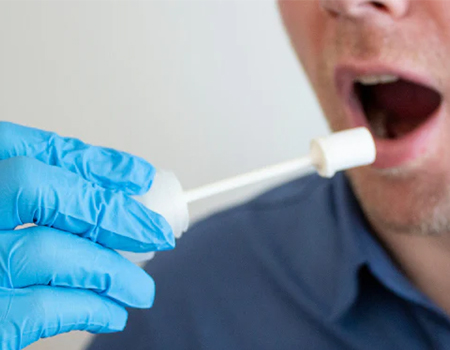
Mouth fluid screening (oral fluid or saliva testing) is a non-invasive diagnostic method used primarily to detect recent drug or alcohol use, as well as specific diseases. A mouth swab is placed inside the mouth to collect saliva, providing quick results typically within 2 to 10 minutes.
Key Applications
- Drug & Alcohol Screening: Used in workplaces, roadside testing, and clinical settings to detect substances like marijuana, opioids, cocaine, and methamphetamines. It is highly effective for identifying very recent use (within the last few minutes to 48 hours).
- Health & Wellness: Advanced saliva testing can detect biomarkers associated with various diseases, including diabetes, heart conditions, and certain cancers.
How the Test Works
- Collection: A sponge-tipped collection swab is placed in the mouth (usually between the lower cheek and gum) for a few minutes until a saturation indicator confirms enough sample has been gathered.
- Analysis: The swab is either inserted directly into a rapid lateral flow testing device (Point-of-Care test) or sent to a laboratory for automated analysis (e.g., LC-MS/MS).
- Reading Results: For rapid tests, colored lines will appear indicating presumptive positive or negative results within minutes.
Advantages
- Non-Invasive: Samples are easily collected without the privacy concerns or discomfort associated with urine or blood tests.
- Hard to Adulterate: Because the collection can be easily observed on-site, it is much more difficult to tamper with or substitute the sample.
- Speed: Rapid testing kits give immediate, on-the-spot indications of substance usage.

Swab Drug Test
A swab drug test (or mouth swab test) uses a saliva sample to detect recent drug or alcohol use. It is a quick, non-invasive alternative to urine testing, typically used for workplace screenings, roadside testing, or at-home testing.
How It Works
- The Collection: An administrator (or you) rubs an absorbent sponge or cotton swab along the inside of your cheeks, gums, and under the tongue for about 1 to 3 minutes until saturated.
- Testing: The swab is either inserted into a handheld testing device that gives results in minutes, or placed in a tube to be sent to a lab.
- Detection: A positive result means a substance’s metabolites (byproducts) were present in your saliva.
What It Detects
Mouth swabs target recent consumption of substances including:
- Alcohol
- Marijuana (THC)
- Cocaine
- Amphetamines and Methamphetamines
- Opioids (Heroin, Morphine, Oxycodone)
- Phencyclidine (PCP)
Detection Times
Swab tests are primarily designed to detect very recent substance use.
- Detection Window: Most substances can be detected within minutes of use and typically remain in the saliva for 12 to 24 hours.
- Maximum Window: Depending on the drug and individual metabolism, some substances may be traceable for up to 36 hours.
Pros and Cons
- Pros: They are nearly impossible to tamper with because the sample is taken on the spot, and they are significantly less invasive than blood or urine tests.
- Cons: Because the window of detection is so short, they will not catch long-term or past drug use as effectively as urine or hair follicle tests.
Oral Secretion Testing
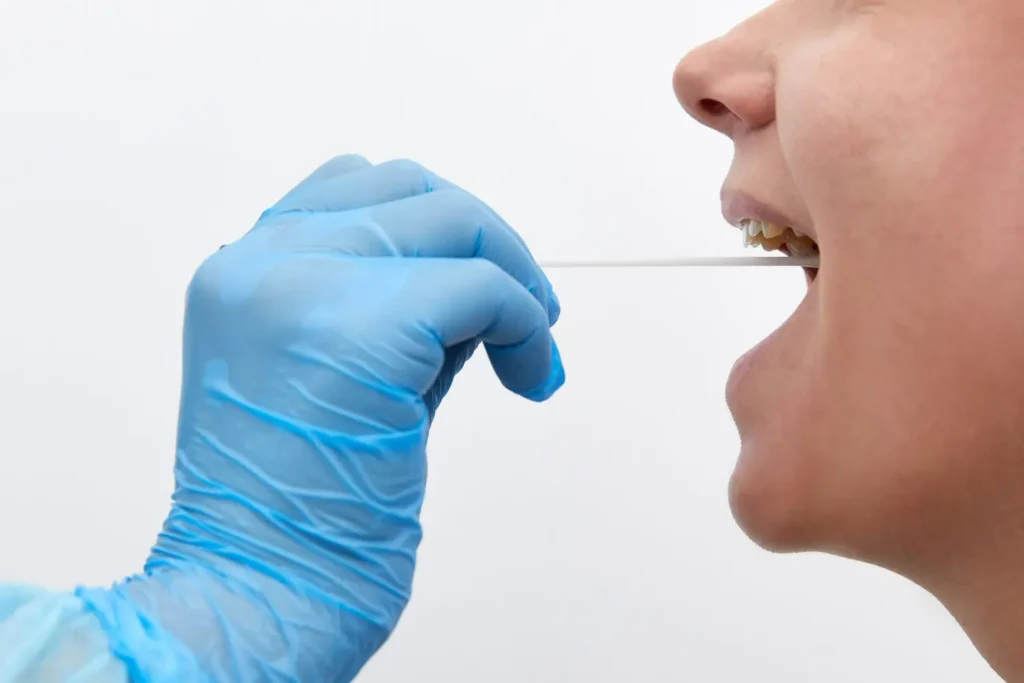
Oral secretion testing (saliva or mouth swab testing) primarily falls into two categories: drug and alcohol screening and diagnostic testing for systemic diseases or oral dryness. It uses a non-invasive swab to collect saliva, checking for substances, hormones, and various health conditions.
1. Oral Fluid Drug and Alcohol Testing
A mouth swab detects drugs, medications, and alcohol in your body by collecting saliva from the inside of your cheeks and gums.
- Detection window: Saliva testing generally identifies recent drug use, typically as early as \(30 \text{ minutes}\) after ingestion and lasting up to \(48\) to \(72 \text{ hours}\) depending on the substance.
- Testing process: A collector uses an absorbent swab in the mouth, which can either be analyzed on-site via a handheld device or sent to a laboratory for confirmation. Point-of-collection tests yield results in minutes.
- Substances detected: Alcohol, marijuana, cocaine, opioids, and amphetamines.
- Learn more: Official testing guidelines and products can be explored on the Cleveland Clinic Oral Drug Test Guide or Thermo Fisher Scientific Oral Fluid Testing.
2. Clinical and Diagnostic Saliva Testing (Salivaomics)
Beyond drugs, saliva contains a vast array of proteins, hormones, and genetic material that clinical laboratories can analyze to diagnose or screen for various health conditions.
- Conditions evaluated: Hormonal imbalances (like cortisol in Cushing’s disease), infectious diseases (e.g., HIV), and markers linked to diabetes, Parkinson’s, or cardiovascular disease.
- Oral dryness (Xerostomia): Dentists evaluate salivary gland function and secretion volumes using methods like the Saxon test (chewing a gauze sponge for 2 minutes) or measuring unstimulated/stimulated saliva flow.