
Hair Strand Testing
Hair strand testing (often called a “hair follicle” test) analyzes clipped strands of hair to screen for illicit drugs, prescription misuse, or alcohol consumption. It provides a long-term historical record of substance use rather than just recent history.
How It Works
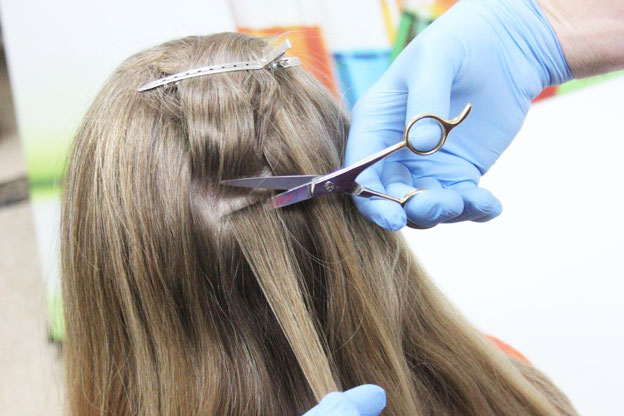
- Sample Collection: A small sample of hair (usually about the width of a pencil) is clipped from the scalp using scissors.
- Detection Mechanism: As substances are processed by the body, metabolites (chemical markers) enter the bloodstream and become trapped in the hair shaft.
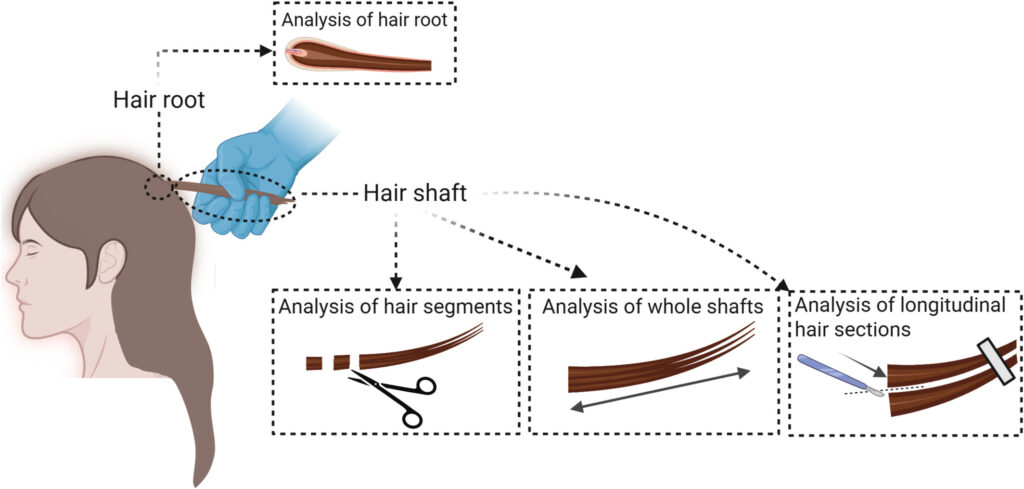
- Segmentation: Because hair grows at an average rate of 1 centimeter per month, labs can segment the hair to create a month-by-month timeline of an individual’s usage.
Detection Windows & Capabilities
- Standard Window: Testing head hair typically covers a 3-month (90-day) period.
- Extended Window: If longer hair is available, testing can trace usage back for 6 to 12 months.
- Substances Detected: It can screen for a wide variety of substances, including opioids, cocaine, cannabis, amphetamines, and alcohol markers (EtG/FAEE).
Applications and Considerations
- Common Uses: It is widely utilized in pre-employment screenings, court-ordered custody disputes, and criminal justice proceedings.
- Limitations & Accuracy: Environmental contamination (e.g., being in a room where someone is smoking) can sometimes complicate results. There are also ongoing discussions among experts regarding potential biases in pigment absorption and lab-to-lab variations.
- Alternative Samples: If an individual does not have hair on their head, body hair can be used, though the growth rate and detection window are less precise.

Long-Term Detection Test
A long-term detection test typically refers to detecting traces of substances (like drugs or alcohol) over an extended period, assessing pharmaceutical stability, or measuring chronic environmental hazards like radon. Specific details depend on the type of long-term detection test you are looking for:
1. Substance and Drug Detection Tests
These tests analyze different biological samples based on how long a substance remains detectable in your body:
- Urine Tests: Detects most substances for a few days to a week. Chronic heavy use of certain substances (e.g., cannabis) may be detectable for up to 30 days.
- Blood Tests: Provide a short detection window, usually ranging from a few hours to a couple of days.
- Hair Follicle Tests: Offer the longest detection window. They can detect substance usage for up to 90 days by testing the 1.5 inches of hair closest to the scalp.
2. Environmental Long-Term Testing
- Radon Testing: Measures average indoor radon gas levels over a period of 90 to 365 days using alpha-track detectors. Long-term testing is recommended because radon levels fluctuate daily and seasonally. You can find accredited test kits and laboratories through local environmental and health agencies.
3. Medical and Health Markers
- Health Longevity Markers: Long-term health tests involve tracking blood biomarkers (e.g., HbA1c, cholesterol, inflammatory markers) or genetic screenings that correlate with an individual’s long-term healthspan and susceptibility to chronic diseases.

Capillary Drug Testing
Capillary drug testing uses a simple finger-prick to draw a small drop of blood, often using volumetric absorptive microsampling (VAMS). It provides a less invasive, quicker alternative to traditional venipuncture for detecting drug metabolites and is increasingly used in pain management, anti-doping analysis, and clinical monitoring.
How It Works
- Collection: A lancet is used to prick the fingertip. The first drop of blood is wiped away to prevent contamination from tissue fluids, and the remaining blood is collected on a specialized absorbent tip or microtube.
- Analysis: Samples are typically analyzed using advanced methods like Liquid Chromatography-Mass Spectrometry (LC-MS/MS) or Capillary Electrophoresis (CE).
Advantages
- Less Invasive: Minimizes pain and is highly preferred by patients over standard needle-based venous blood draws.
- Harder to Tamper With: Because samples can be collected quickly under direct observation, it greatly reduces the risk of tampering or sample substitution.
- Flexible Monitoring: It establishes a shorter, more specific drug detection window, making it particularly useful for distinguishing between recent use and older exposure in contexts like anti-doping.
Limitations
- Small Sample Volume: Provides a very small amount of sample, demanding highly sensitive laboratory equipment for accurate detection.
- Potential for Dilution: Aggressively squeezing the finger during collection can force tissue fluid into the sample, which dilutes the blood and leads to inaccurate results.
Hair Toxicology Analysis
Hair toxicology analysis is a forensic and clinical testing method that identifies drug metabolites, heavy metals, and toxins trapped in the hair shaft. Because hair grows slowly, it provides a long-term retrospective detection window of up to 3 months, significantly longer than standard blood or urine tests.
How It Works
- Absorption: As hair grows, tiny blood vessels feed the follicle, allowing substances and their metabolites to become locked into the keratin fibers of the hair shaft.
- Collection: Typically, a 1.5-inch sample of hair (about 90 to 120 strands) is cut as close to the scalp as possible.
- Analysis: Laboratories use advanced techniques like Gas Chromatography-Mass Spectrometry (GC-MS/MS) to separate and identify trace amounts of substances.
Detection Windows
- Head Hair: Standard analysis evaluates a 1.5-inch segment, reflecting drug history over approximately 90 days.
- Body Hair: Because body hair grows much slower and has a longer resting phase, a 1.5-inch sample can reflect exposure for up to 12 months.
Common Applications
- Substance Abuse: Detects drugs like opioids (heroin, morphine), cocaine, amphetamines, and cannabis.
- Heavy Metal Toxicity: Tests for the presence of toxic elements like arsenic, lead, and mercury.
- Forensic Investigations: Used extensively in post-mortem toxicology and investigating drug-facilitated crimes.
Limitations & Considerations
- External Contamination: Differentiating between environmental exposure (e.g., ambient smoke) and actual ingestion can be difficult, requiring rigorous lab wash procedures.
- Timing of Use: Hair analysis cannot pinpoint the exact date or time a substance was consumed.