
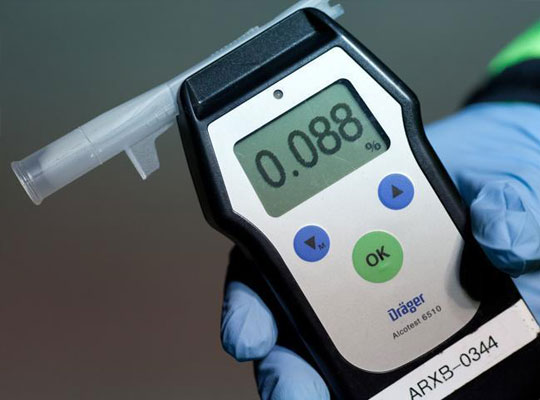
Breathalyzer Test
A breathalyzer test measures the concentration of alcohol (ethanol) in your exhaled breath to estimate your Blood Alcohol Concentration (BAC). It is primarily used by law enforcement and employers to quickly detect intoxication or impairment.
How It Works
- The Process: You exhale into the device, which captures deep lung air.
- The Chemistry: The device oxidizes the alcohol in your breath via an electrochemical fuel cell, generating a small electrical current.
- The Calculation: The amount of electricity produced is directly proportional to your BAC.
BAC and Impairment
- 0.00% BAC: Complete sobriety.
- 0.05% BAC: The legal limit for driving in many parts of the world. At this stage, coordination and judgment begin to decline.
- 0.08% BAC: The standard legal driving limit in countries like the US and UK. At this point, significant impairment of motor skills, balance, and vision occurs.
- 0.15%+ BAC: Severe intoxication, high risk of vomiting, and loss of balance.
Limitations & Accuracy
While breathalyzers are great for quick screening, they are only estimates and can sometimes give false positives. Errors can be caused by:
- Mouthwash & Breath Mints: Many contain alcohol and can cause a falsely high reading if tested immediately.
- Diet and Health: People with high acetone levels (such as diabetics or those on strict ketogenic diets) may trigger false readings.
- Device Calibration: Devices must be regularly calibrated to remain accurate. If a legal or disciplinary action is taken, a blood test is usually required to confirm the exact BAC.
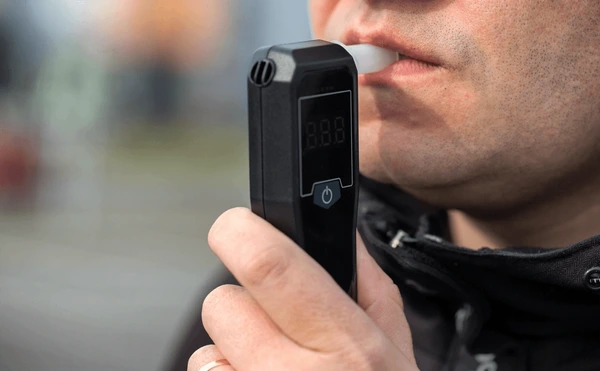
Breath Alcohol Concentration
A breath alcohol concentration (BrAC) test estimates your Blood Alcohol Content (BAC) by measuring the alcohol level in your exhaled breath. It is primarily used by law enforcement for DUI enforcement, in workplaces, and for personal monitoring to gauge intoxication levels safely. Understanding the test process and best practices ensures the most accurate results.
How the Test Works
- The Science: When you drink, alcohol absorbs into your bloodstream and travels to your lungs, where it evaporates into the air you exhale. Breathalyzers detect this deep-lung air to estimate the alcohol concentration in your blood.
- The Process: You take a deep breath and blow steadily into a mouthpiece for about 4 to 6 seconds. The device measures the ethanol using a fuel cell or infrared sensor and displays BrAC, which is mathematically converted to a BAC value (e.g., \(0.08\%\) in the US).
How to Prepare for an Accurate Reading
To prevent false-positive results or artificially high readings, follow these steps before taking a test:
- Wait: Do not consume alcohol for at least 15 minutes prior to testing. Trace amounts of alcohol remaining in the mouth can skew the results.
- Avoid Smoking: Do not smoke or vape for 1 to 5 minutes before the test.
- Rinse Your Mouth: If you have used mouthwash or mouth sprays recently, rinse your mouth with water and wait 15 minutes.
What the Results Mean (General US Standards)
Blood Alcohol Concentration is calculated as a percentage of alcohol per volume of blood (e.g., \(0.08\) grams of alcohol per \(100\text{ ml}\) of blood):
- 0.00% to 0.02%: Generally considered sober.
- 0.02% to 0.03%: Slight mood elevation or relaxing “high”.
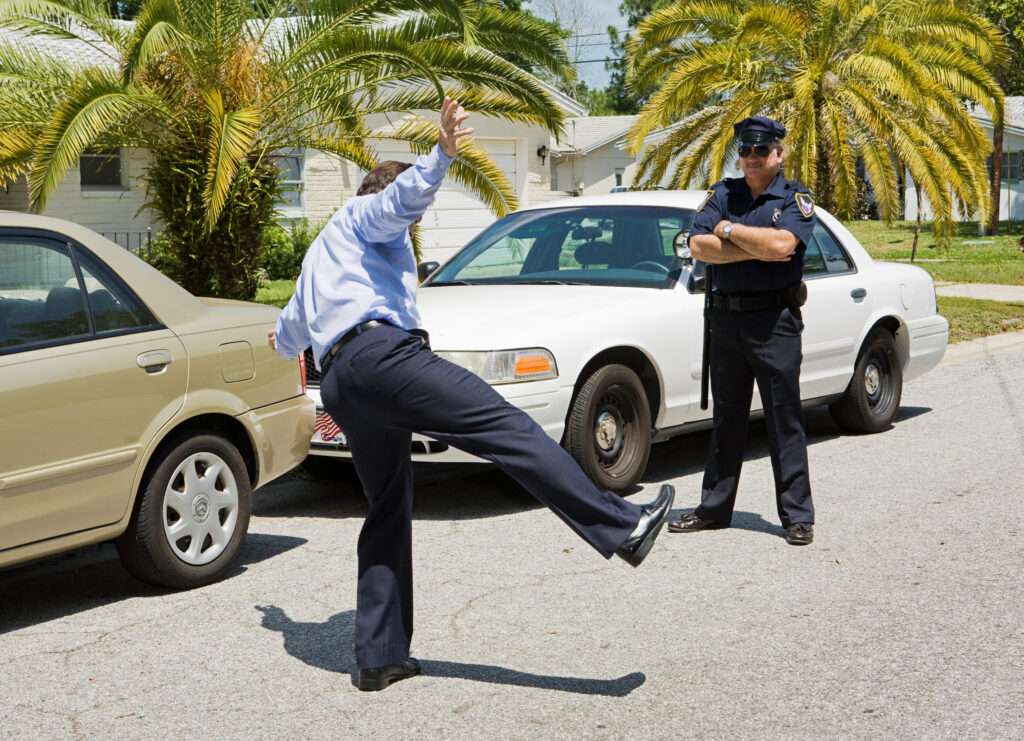
Roadside Sobriety Test
A roadside sobriety test (or Field Sobriety Test) is a battery of physical and visual evaluations used by law enforcement to establish probable cause that a driver is impaired by alcohol or drugs.
The Standardized Tests
In many jurisdictions, officers follow a standardized battery developed by the National Highway Traffic Safety Administration (NHTSA):
- Horizontal Gaze Nystagmus (HGN): The officer asks you to follow a moving object (like a pen or flashlight) with your eyes from side to side. They are looking for involuntary jerking of the eyeball, which becomes exaggerated when impaired.
- Walk-and-Turn: You are instructed to take nine steps, heel-to-toe, along a straight line, turn, and take nine steps back. The officer looks for lost balance, using arms for stability, and stepping off the line.
- One-Leg Stand: You must stand with one foot raised about six inches off the ground and count out loud for 30 seconds. The officer checks for swaying, hopping, or putting the foot down.
Legal Context
- Voluntary Nature: In most places, performance tests like the walk-and-turn are completely voluntary. You generally have the right to decline them, though this may not exempt you from taking mandatory chemical or breathalyzer tests required by implied consent laws.
- Subjectivity: These tests are subjective and can be affected by uneven pavement, weather, footwear, or medical/neurological conditions.

Evidential Breath Testing
Evidential Breath Testing (EBT) refers to the use of highly precise, scientifically calibrated breathalyzers used by law enforcement and regulatory bodies to measure blood alcohol concentration (BAC). Because EBTs produce legally admissible printouts, they are the primary testing standard for DUI arrests and federal workplace safety programs.
Key Characteristics & Standards
- Legal Admissibility: Unlike basic screening devices, EBTs must meet strict regulatory standards, such as those set by the US Department of Transportation EBT Approvals or local forensic guidelines, to ensure the data is strictly accurate for court.
- Dual Technology: These devices rely on either Infrared (IR) Spectrometry or Electrochemical Fuel Cell sensors to selectively detect and measure ethanol in the deep lungs (alveolar air) without interference from other compounds.
- Calibration & Checks: A valid evidential breath test requires strict operational checks, including testing an air blank and an external calibration standard before and after the subject’s test to ensure the machine’s accuracy.
Typical Applications
- Law Enforcement: Administered post-arrest at a police station or on specialized mobile breath testing buses to establish concrete BAC evidence for DUI/DWI prosecutions.
- Workplace Testing: Mandated for safety-sensitive operations (such as aviation, trucking, or rail) to conduct required confirmation tests following a positive alcohol screen.
How the Process Works
- Observation: A certified technician or Breath Alcohol Technician (BAT) observes the subject for a waiting period (usually 15-20 minutes) to ensure they have not consumed anything, vomited, or burped, which could skew the results.